
I Built 4 Apps With AI as a Product Manager. Here's What It Taught Me
What happened when I stopped writing specs for a while and started shipping my own small tools, and why every PM should try it.
As a product manager, most of my week is spent describing things other people will build. Problem statements, user stories, acceptance criteria, roadmaps. It's the job, and I like it. But at some point I noticed I hadn't shipped anything with my own hands in a long time.
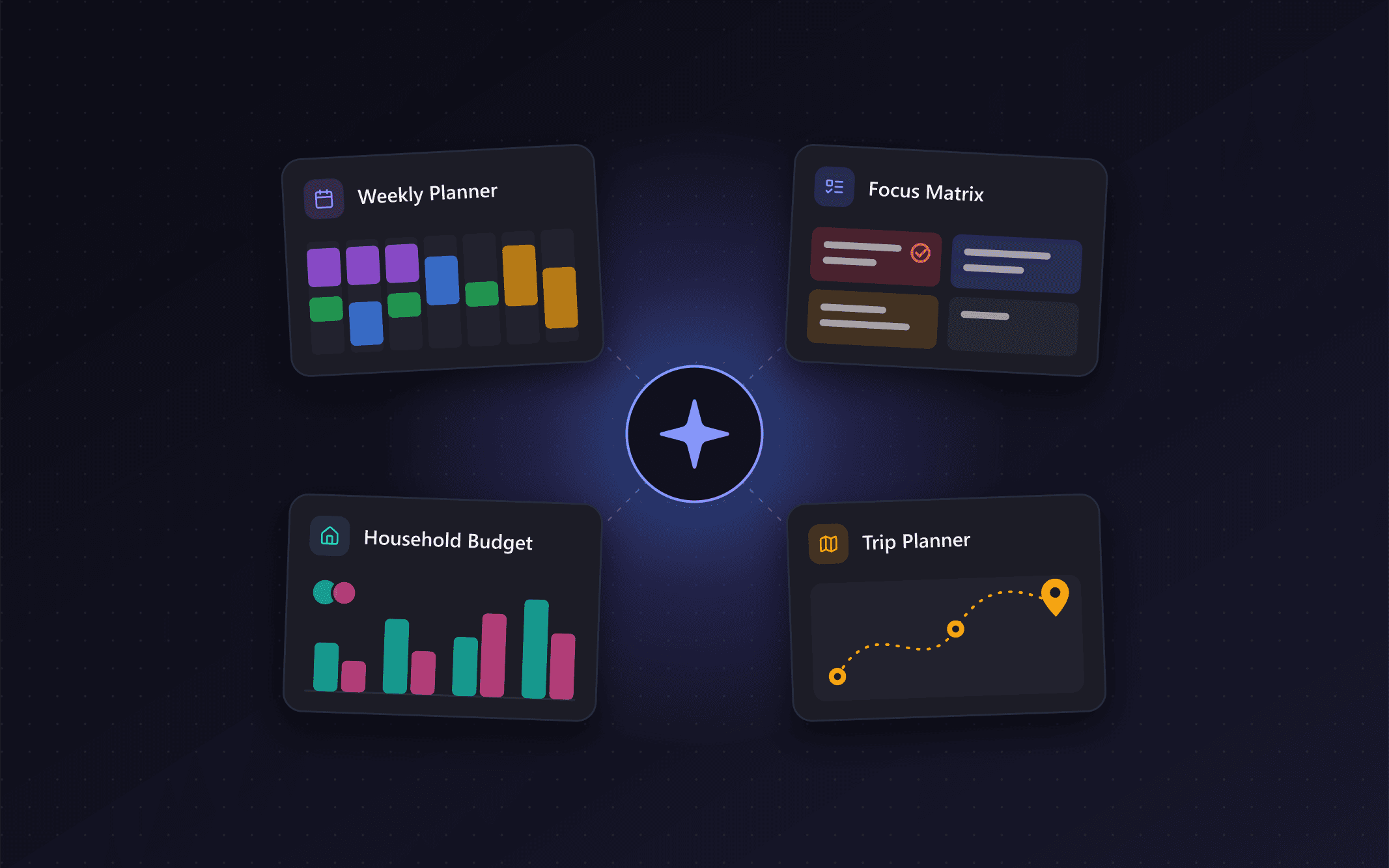
So I started building on the side. Small tools, born out of real problems in my own life. Today there are four of them live in my Lab: a weekly planner, a focus app, a household budget tracker and a trip planner.
None of them would exist without AI. And building them taught me more about product management than a few of the courses I've taken.
Why a PM Should Build at All
Let me be clear about one thing first: this is not a "PMs should learn to code and replace engineers" post. They shouldn't, and they won't.
The point is different. When you build something yourself, end to end, you experience every decision you usually delegate. Every vague requirement comes back to bite you. Every "small" feature turns out to have five edge cases. Every trade off is yours to make, with nobody to escalate to.
It's the fastest feedback loop on your own product thinking that I know of.
And with today's AI tools, the cost of trying has collapsed. You don't need a weekend hackathon and a stack of tutorials. You need a problem worth solving and an evening.
The Four Apps (and the Lesson Behind Each)
Weekly Planner: Being Your Own User Is a Superpower and a Trap
Weekly Planner is a time blocking app built around my own weekly rhythm: office days, gym, side business, studies and time for life. Drag, reschedule, track blocks week by week.
Discovery was trivial. I am the user. I knew exactly what annoyed me about generic calendar apps and what I wanted instead.
That's also the trap. When you're the only user, every opinion you hold feels like validated insight. In a real product, that's how you end up building for the loudest person in the room, and sometimes that person is you. Building this app made me much more careful about separating "I want this" from "users need this" at work.
Focus Matrix: Scope Creep Doesn't Care Who the PM Is
Focus Matrix started as a to do list. Then it got Pomodoro sessions. Then an Eisenhower prioritization matrix. Then completion statistics.
Every addition made sense on its own. That's exactly how scope creep works: no single feature is the problem, the sum is. With AI, adding a feature takes minutes, which makes saying "no" even harder, because the cost of "yes" looks so low.
The real cost isn't building it. It's everything after: more states to test, more UI to keep consistent, more things that can break. That lesson translates one to one to any product team that's just adopted AI coding tools.
Household Budget: Two Users Means Two Products
Household Budget is a shared tracker for two people, with expense splitting by person, recurring bills and receipt scanning.
The moment a second user enters the picture, everything changes. Who sees what? Who can edit whose expenses? What happens when two people log the same bill? Single user apps hide all of this.
It's a small app, but it forced me to think about permissions, shared state and conflicting expectations, which is the stuff that quietly eats half the timeline in real B2B products.
Trip Planner: When AI Is Inside the Product
Trip Planner is different from the others, because AI isn't just the tool I built it with. It's the core of the product. You enter your preferences and get a day by day itinerary with accommodation suggestions.
This is where product work gets genuinely new. The output isn't deterministic. The same input can give a great plan one day and a mediocre one the next. "Does it work?" stops being a yes or no question and becomes "is it good enough, often enough?"
If you're a PM working on anything with AI features, building one small AI powered app yourself is the best crash course I can recommend. You'll understand why prompt design, evaluation and handling bad outputs are product decisions, not just engineering details.
Where AI Shines, and Where It Doesn't
After four projects, here's my honest take.
AI is great at:
- Getting from zero to something. A working first version in an evening is real, and it's a game changer for testing ideas.
- Boilerplate and the boring parts. Forms, layouts, CRUD logic, styling. The stuff nobody enjoys writing.
- Explaining things. When something broke, asking "why is this happening?" usually got me further than searching docs.
AI struggles with:
- Knowing what to build. It will happily build whatever you ask for, including the wrong thing. Garbage requirements in, polished garbage out.
- Keeping the big picture. As an app grows, changes in one place start breaking things in another. Without a clear structure, you end up fixing the same bug three times.
- Taste. It can generate ten versions of a screen. Deciding which one is right for the user is still on you.
Notice the pattern? The weak spots are exactly the PM skills: clarity of the problem, prioritization, product judgement. AI made the building part cheaper and the thinking part more valuable, not less.
Want to Try It? Start Here
If you're a PM curious about building, a few practical tips:
- Pick your own problem. Something that annoys you weekly. You'll have motivation and a built in user.
- Write a mini PRD first. One paragraph on the problem, a short list of must haves, an explicit list of what's out of scope. Then give it to the AI. You'll be surprised how much better the result is.
- Ship the smallest version. Get it live, use it for a week, then decide what's next. Exactly like you'd advise your own team.
- Keep a "not now" list. Every feature idea goes there first. Most of them will stay there, and that's fine.
- Reflect on the decisions, not the code. The goal isn't to become an engineer. It's to sharpen your product judgement.
Wrapping Up
Building these four apps didn't make me a developer again. It made me a better product manager. I'm sharper on scope, more precise in requirements and more honest about my own assumptions.
All four apps are live, so feel free to poke around in the Lab. And if you've got an idea for a tool that would make your life easier, send it my way. The next app might be yours.

Sławomir Sojka
Product Manager with 6+ years of experience in IT